
We know all too well that as the inevitable departure from school to adult services comes near, it can feel like approaching the edge of a cliff. What comes next? Who will provide services and supports? At We See Different, we offer expert secondary transition planning consult and guidance every step of the way.
Reach out if you’re seeking support with:
Eligibility Determination Appeals processes
Disability service connection and navigation
Referrals to community-based agencies
Self-advocacy mentoring and guidance
Assistive technology consultation
Image: A young adult wearing dark glasses plays a piano.
Eligibility Determination Appeals Processes
We ensure parents understand their rights and responsibilities, and that their their teenager has access to an appropriate education.

Disability Service Connection & Navigation
Secondary transition planning guidance ensure students overcome barriers in accessing services like health care, social services, and legal systems.

Referrals to Community-Based Agencies
We keep up-to-date with local providers and resources that can further enhance your education, independence and community integration.

Self-Advocacy Mentoring and Guidance
We provide guidance to individuals with disabilities to empower them to speak up for themselves and the things that are important to them.
Assistive Technology Consultation
We help parents connect with AT-based businesses, organizations and funding sources to acquire the tools your child needs to succeed.

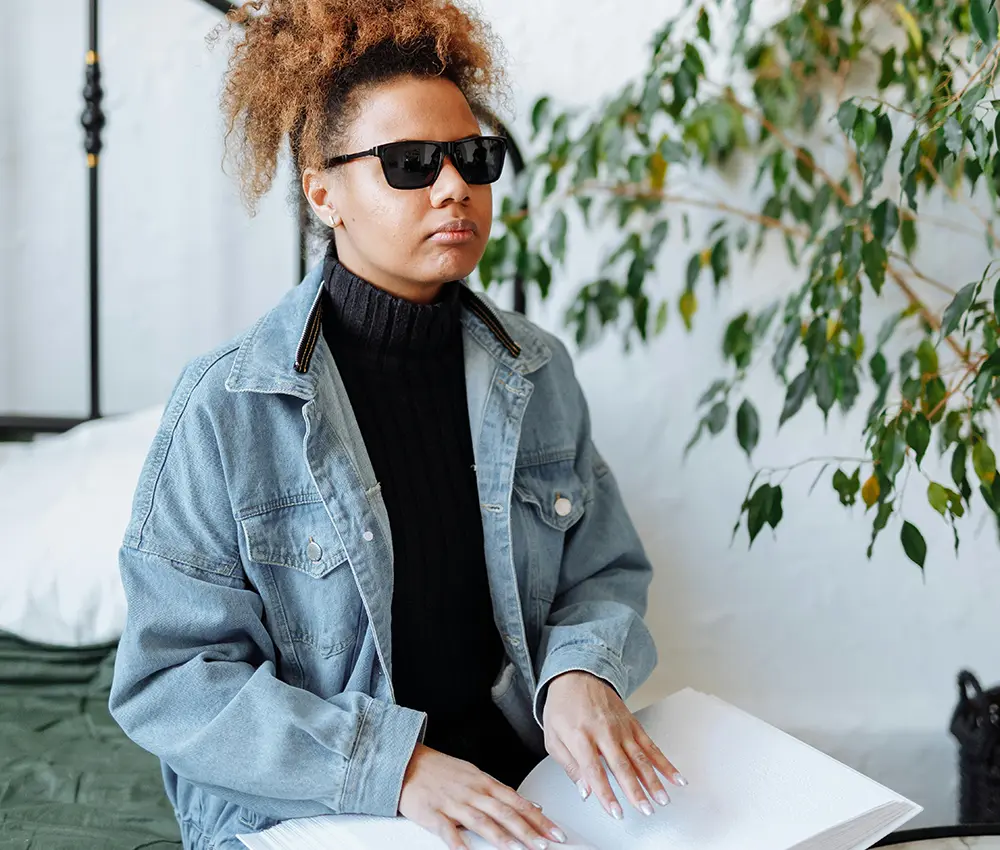
Image: A young adult wearing dark glasses and a ponytail sits on her bed reading braille.
Looking Forward to a Bright Future
Transitioning into adult life after high school can be one of the most challenging times in a young adult’s life. This is especially true for students who receive disability services. In addition to leaving secure supports that are mandated by law, they are also moving into a system where services are less certain. At We See Different, our transition planning guidance help students and families understand the accommodations that are helpful to the their teen’s disability. In this way, the transition from school into the real life is less stressful and more about looking forward to a bright future!